What to Expect in Your Child's First ABA Session

In short: Your child's first ABA session focuses on building trust and gathering information. A BCBA will likely conduct a preference assessment and observe your child in play, then discuss initial goals. You'll also talk about scheduling, insurance, and how you can support the process at home.
Key takeaways
- The first session is about rapport-building and observation, not intense therapy.
- A BCBA will lead the session, often with a technician present for training.
- A preference assessment helps identify your child's motivators for learning.
- You will receive a summary of findings and discuss next steps, including insurance coverage.
Preparing for the First ABA Session
The first applied behavior analysis (ABA) session can feel like a big step, but it's designed to be a gentle, collaborative start. Your child's BCBA (Board Certified Behavior Analyst) will take time to get to know your family, understand your child's unique strengths, and build a foundation of trust. This session is not about drills-it's about connection and information gathering.
Before the session, you'll likely have a brief phone or video call with the BCBA to discuss your child's medical history, any diagnoses, and your main concerns. They may ask about your child's favorite toys, foods, and activities. This helps them plan a session that feels natural and engaging. If your child has sensory sensitivities or specific communication needs, let the BCBA know early so they can adapt.
Our free matching service at Find ABA Near Me can connect you with vetted BCBA-led providers in your area. Just share a few details, and we'll help you find a provider that fits your family's needs and is in-network with your insurance plan.

🔗 Related reading: Social Skills ABA Therapy for a 10-Year-Old · Local ABA Therapy
Who Will Be There and What to Bring
Typically, the first session includes the BCBA and sometimes a registered behavior technician (RBT) who will work with your child long-term. The BCBA will guide everything, while the RBT may observe or participate under supervision. You are always welcome to stay-many parents watch or join in to build comfort.
Bring a list of any questions you have, as well as any comfort items your child uses (like a favorite blanket or toy). A water bottle and snacks can help if your child needs a break. The provider may also ask for copies of any recent evaluations, school reports, or insurance cards.
The Structure of the First Session
Introductory Conversation
The session usually begins with a chat between you and the BCBA. They'll review your concerns, goals, and any recent changes in your child's life. This is a good time to ask practical questions about session length, frequency, and how progress is tracked.
Preference Assessment and Play-Based Observation
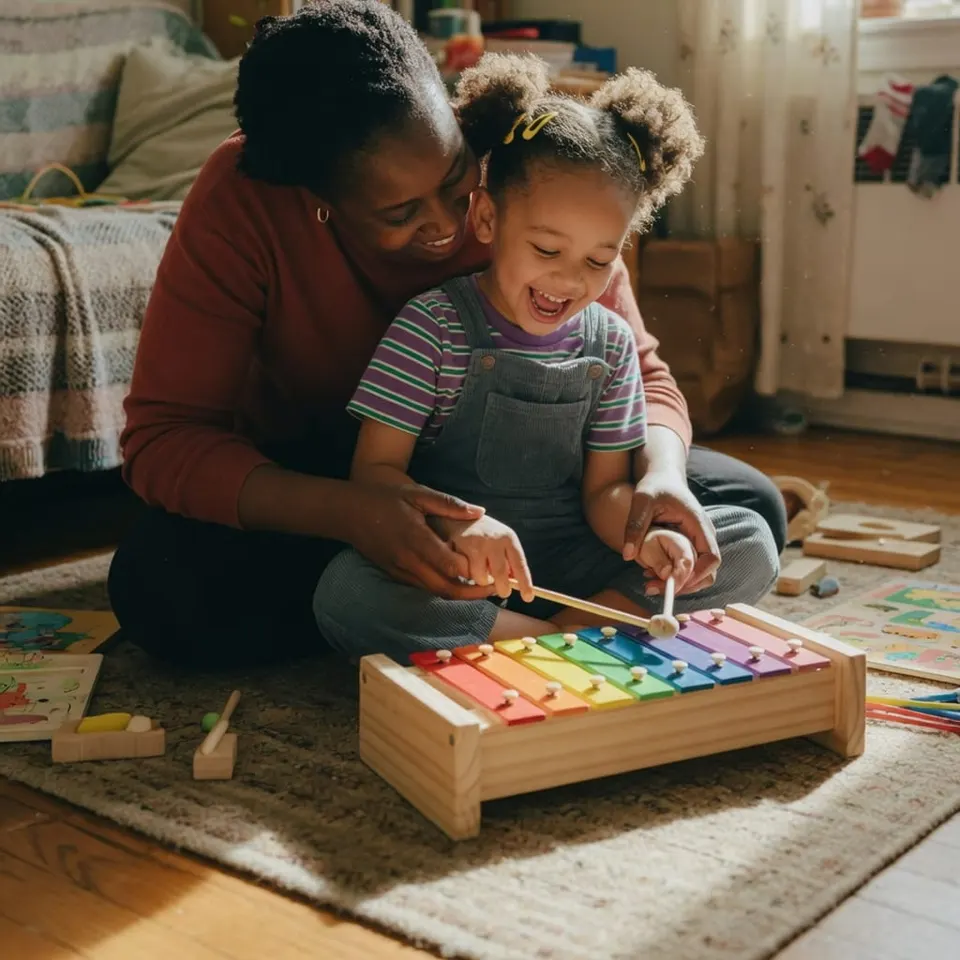
Next, the BCBA will engage your child in play to observe their natural interests. This is not a formal test. They'll watch how your child interacts with toys, requests items, and responds to simple directions. This helps identify what motivates your child-often called a preference assessment. For example, does your child like bubbles, puzzles, or spinning tops? Knowing these motivators is key for designing effective teaching strategies later.
Direct Observation of Skills
The BCBA may also present a few simple tasks to see what your child already knows. This might include following a one-step instruction (like 'give me the ball'), imitating a sound or action, or identifying a picture. All of this is done in a low-pressure, fun way. If your child is nonverbal or uses AAC (augmentative and alternative communication), the BCBA will adapt accordingly.

🔗 Related reading: Colorado HCBS Waiver for Autism: A Step-by-Step Guide · Local ABA Therapy
Setting Initial Goals and a Plan
By the end of the session, the BCBA will share their initial observations. They will discuss potential goals that are specific, measurable, and meaningful to your family. Common early goals include increasing communication (requesting, labeling), improving play skills, or reducing challenging behaviors in a gentle way. The BCBA will also explain how often sessions might occur-often 10 to 25 hours per week for intensive therapy, but starting with fewer hours is common.
You will receive a written behavior intervention plan (BIP) or treatment plan within a few days. This document outlines the goals, methods, and how progress will be tracked. It's a living document that you can review and ask questions about.
The Role of Parents and Caregivers
Your involvement is crucial to success. Many providers encourage parents to observe sessions and even practice strategies at home. You will receive training on simple techniques, like how to reinforce positive behaviors or use visual schedules. The BCBA is your partner-speak up if something doesn't feel right or if you need more support. Regular meetings (often weekly or biweekly) will keep you updated on your child's progress.
Our free service connects you with providers who emphasize parent collaboration. When you get matched, you'll have options to choose a provider that fits your parenting style and schedule.
Insurance Coverage and Costs
ABA therapy is considered a medically necessary treatment for autism spectrum disorder in many states, and most private insurance plans cover it under mandated autism benefits. Additionally, state Medicaid programs (like California's Medi-Cal or New York's Medicaid) often cover ABA. Your provider will handle insurance verification and pre-authorization. In the first session, they may ask for your insurance details and explain your copay or deductible, but many families have little or no out-of-pocket cost. If you are uninsured or underinsured, ask about sliding-scale fees or grants.
Find ABA Near Me works with providers who accept a wide range of insurance plans. We can help you find a provider in your network.
Common Mistakes to Avoid
- Expecting immediate progress: The first few weeks are for building rapport and establishing routines. Progress is often slow at first, then accelerates.
- Not asking enough questions: You are the expert on your child. If the BCBA uses jargon, ask for clarification. No question is too small.
- Forcing your child to participate if they are overwhelmed: A good BCBA will recognize distress and adjust. If your child seems highly anxious, ask for a slower pace or more breaks.
- Neglecting self-care: Caring for a child with autism can be demanding. Use the therapy time to rest or attend to other needs-you deserve support too.
After the First Session: Next Steps
Following the initial session, the BCBA will refine the treatment plan and begin ongoing sessions. You'll schedule a parent training meeting (often formalized as a caregiver training session) where you learn to implement strategies at home. The provider will also begin collecting data on your child's skills and challenges, which will be shared with you regularly. Most importantly, you'll start to see a positive shift as your child feels understood and supported. Over time, ABA can help build independence, communication, and confidence.
If you haven't already, use our free matching service to get connected with a BCBA-led provider in your area. It takes just minutes to start the process.